
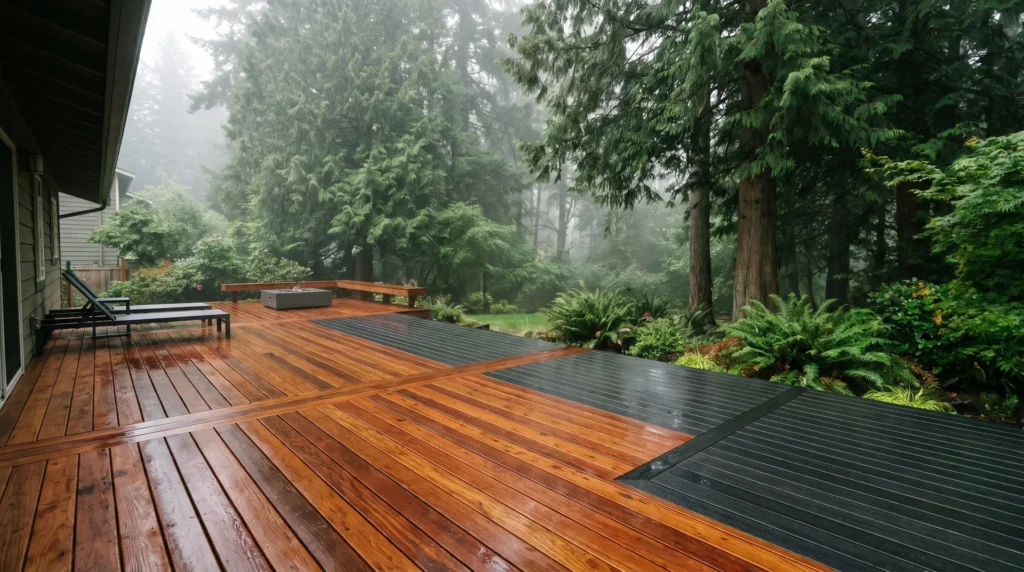
In Metro Vancouver’s wet coastal climate, where annual rainfall varies sharply from Tsawwassen and Richmond up to the North Shore mountains, choosing a decking material is a significant structural decision. Because north-facing or tree-shaded lots can remain damp for extended stretches during the fall and winter rainy season, deck assemblies must be designed to manage persistent moisture.
Selecting between Western Red Cedar, capped composite, and waterproof vinyl membranes requires understanding how these materials perform under frequent moisture exposure. As a residential carpentry contractor, SpringVan Carpentry guides homeowners through custom deck building decisions by prioritizing structural integrity and building-envelope protection alongside aesthetics.
Understanding the Core Architectural Differences
Before comparing costs and lifespans, Vancouver homeowners must understand the two distinct structural approaches to building a deck in a wet climate:
-
Drained, Open-Joint Deck Boards (Cedar and Composite): These are installed with small drainage gaps (typically 1/8-inch to 3/16-inch, depending on board moisture content and manufacturer guidelines) between the boards. Rainwater flows directly through the deck surface to the ground below. This system is suited for open-frame backyard decks where water can drain freely underneath.
-
Waterproof Sheet Membranes (Vinyl, such as Duradek): These systems act as a continuous, sloped roofing surface. Typically installed over a tongue-and-groove plywood substrate with heat-welded seams, they serve as both a pedestrian walking surface and a waterproof roof assembly over enclosed living spaces, garages, or dry storage areas.
Metro Vancouver Cost, Lifespan, and Maintenance Comparison
Pricing across Metro Vancouver varies depending on site access, elevation, demolition requirements, and whether a quote covers basic surface installation or full turnkey construction (including concrete footings, framing, ledger flashing, stairs, and code-compliant railings). Rising softwood lumber costs over recent years have also narrowed the upfront price gap between higher grades of cedar and entry-level synthetic alternatives.
Estimated Cost and Maintenance Comparison (Metro Vancouver)
|
Metric |
Western Red Cedar |
Capped Composite (e.g., Trex, TimberTech) |
Waterproof Vinyl Membrane (e.g., Duradek) |
Capped Cellular PVC (e.g., AZEK) |
|---|---|---|---|---|
|
Material Only (per sq ft) |
~$3 – $15 (varies by knotty vs. clear grade) |
~$10 – $25 |
~$12 – $20 (membrane and trim) |
~$14 – $25+ |
|
Surface Install / Re-Decking (per sq ft) |
~$30 – $60 |
~$40 – $80 |
~$35 – $65 (less if re-covering sound plywood) |
~$55 – $80 |
|
Turnkey Structural Build (per sq ft) |
~$50 – $100 |
~$60 – $120 |
~$45 – $85 (includes sloped plywood substrate) |
~$75 – $140 |
|
Typical Service Life |
10 – 25+ years (depends heavily on sun exposure and upkeep) |
25 – 50 years (surface board; substructure depends on framing protection) |
15 – 20 years |
30 – 50+ years (surface board) |
|
Routine Maintenance |
Clean annually; re-apply penetrating oil or stain every 1-3 years |
Wash 1-2x/year with mild soap and soft bristle brush; clear gaps |
Wash 1-2x/year; inspect drains and perimeter sealants |
Wash 1-2x/year with soap and water |
|
Ongoing Upkeep Cost |
Moderate to High (stain materials plus DIY time or professional labor) |
Low (routine cleaning only) |
Low (routine cleaning only) |
Low (routine cleaning only) |
The Total Cost of Ownership Crossover
While capped composite generally carries a higher upfront installation cost than knotty cedar, the long-term cost gap narrows over time. Because exposed cedar decks require periodic cleaning and re-staining every few years to prevent weathering and moisture damage, homeowners who hire out regular wood maintenance often find that composite equalizes in total cost within roughly a decade. However, if a homeowner selects premium clear cedar grades upfront, the initial build cost can approach that of mid-range composite from day one.
Deep Dive by Material: Performance in Vancouver’s Rain
Western Red Cedar (Thuja plicata)
Western Red Cedar is a native British Columbia softwood and a traditional choice for West Coast residential architecture. Cedar heartwood contains natural extractives that help resist fungal decay, and because the wood has very little pitch or resin, it accepts penetrating oil finishes well.
However, cedar deteriorates much faster when it cannot dry out between rainfalls. During Vancouver’s wet fall and winter months, cedar boards in shaded areas, under plant pots, at unsealed cut ends, or tight against the house remain damp. Repeated wetting and drying, combined with winter freeze-thaw cycles, can cause surface checking (splitting) and eventual fungal decay, especially in sapwood or lower-grade boards. Adding overhead rain protection such as custom patio covers or pergolas helps shield cedar surfaces from direct rainfall and extends the intervals between refinishing.
Capped Composite and Cellular PVC
Modern capped composite decking (which blends wood fiber and plastic inside a protective polymer shell) and cellular PVC decking (made from synthetic polymer without wood fiber) are designed to resist moisture absorption. Unlike natural wood, the synthetic boards themselves do not rot, warp, or splinter.
Even so, synthetic decking is not maintenance-free in a coastal climate. While fungi cannot feed on a synthetic cap, airborne pollen, dirt, and tree debris collect on the surface and in board textures, allowing algae, moss, or mildew to grow in damp, shaded yards if the deck is not washed periodically.
More importantly, a long-lived composite or PVC deck board is only as durable as the wood frame beneath it. Because synthetic boards do not absorb moisture or breathe like wood, water can remain trapped where the boards sit flat against pressure-treated wood joists. Without protective waterproof butyl joist tape over the tops of joists and beams, alongside proper ledger flashing and ventilation, the underlying wood framing can rot well before the synthetic surface boards wear out.
Waterproof Vinyl Membranes (e.g., Duradek)
Sheet-vinyl waterproofing systems such as Duradek are widely used across the Lower Mainland for elevated sundecks and balconies. Unlike spaced boards that allow rain to drain through gaps, a walkable PVC roof and traffic membrane is typically a 60-mil sheet with a fabric backing that is fully adhered to a sloped plywood substrate.
Under the BC Building Code and the Vancouver Building By-law, a deck assembly that encloses or protects a space beneath it, or that does not allow water to drain freely through the surface, must be designed and flashed as a roof assembly. Walkable PVC membranes that carry appropriate evaluation listings for roofing over habitable spaces allow a single continuous surface to serve as both the waterproofing layer and the pedestrian walking surface.
Choosing the Right Deck Building Contractor
To ensure structural longevity, homeowners must align their material choice with specialized installation expertise. Here are the specific scenarios for hiring material-specialized Vancouver deck builders.
When should you hire a vinyl deck contractor in Vancouver?
You need a contractor experienced in waterproof vinyl deck assemblies when your deck sits over a garage, enclosed living space, or dry storage area that requires a continuous roof-grade barrier. Vinyl waterproofing is only as reliable as the carpentry and substrate preparation beneath it. Inadequate deck slope that allows water to pond, deteriorating rim joists, or improperly flashed wall transitions can lead to building-envelope leaks and compromise membrane warranties. A durable assembly relies on a properly sloped tongue-and-groove plywood substrate (typically a minimum 2% slope, or 1/4 inch per foot, away from the house), heat-welded seams, and perimeter flashing integrated behind the exterior wall cladding.
What to expect from a cedar deck builder in Vancouver?
A qualified cedar deck builder focuses on moisture-management carpentry: leaving appropriate spacing between boards for airflow, sealing cut end-grains, applying joist protection tape, and using corrosion-resistant stainless steel fasteners to help prevent dark tannin staining. Experienced carpenters also help homeowners navigate Western Red Cedar grade options (such as knot-free clear heartwood grades versus tight-knot grades) and select properly seasoned lumber to reduce shrinkage and warping after installation.
Why work with a specialized composite deck builder in Vancouver?
Working with an experienced composite deck builder is important because synthetic boards behave differently than solid wood. In addition to sealing wood joists and beams with butyl flashing tape to protect the substructure from trapped moisture, composite and PVC boards are more flexible than wood and expand and contract with temperature changes. Depending on the product line and whether boards are installed straight or diagonally, builders often need closer joist spacing (commonly 12 to 16 inches on center) to minimize underfoot bounce, along with dedicated blocking for picture-frame borders and stairs.
Final Thoughts on Deck Materials for the Pacific Northwest
In Metro Vancouver’s wet climate, choosing between cedar, composite, and vinyl starts with what sits underneath the deck. When the deck covers an enclosed room, garage, or dry patio space below, building code requirements call for a sloped, waterproof roofing assembly such as a walkable vinyl membrane. For open-frame backyard decks where rainwater can drain freely to the ground, capped composite, cellular PVC, and Western Red Cedar are the primary options, balancing upfront budget against long-term refinishing preferences.
Ultimately, any deck surface is only as durable as the framing and drainage details supporting it. SpringVan Carpentry approaches every project with a structure-first focus, building footings, framing, and moisture-management details designed for West Coast weather. If you are planning a new build or replacing an aging structure, reach out to our team to discuss the right material and design for your property.